|
|
|||||||||||||||||||||||||||||||||||
|
|
|||||||||||||||||||||||||||||||||||
|
|
|||||||||||||||||||||||||||||||||||
|
|
|||||||||||||||||||||||||||||||||||
|
|
|||||||||||||||||||||||||||||||||||
|
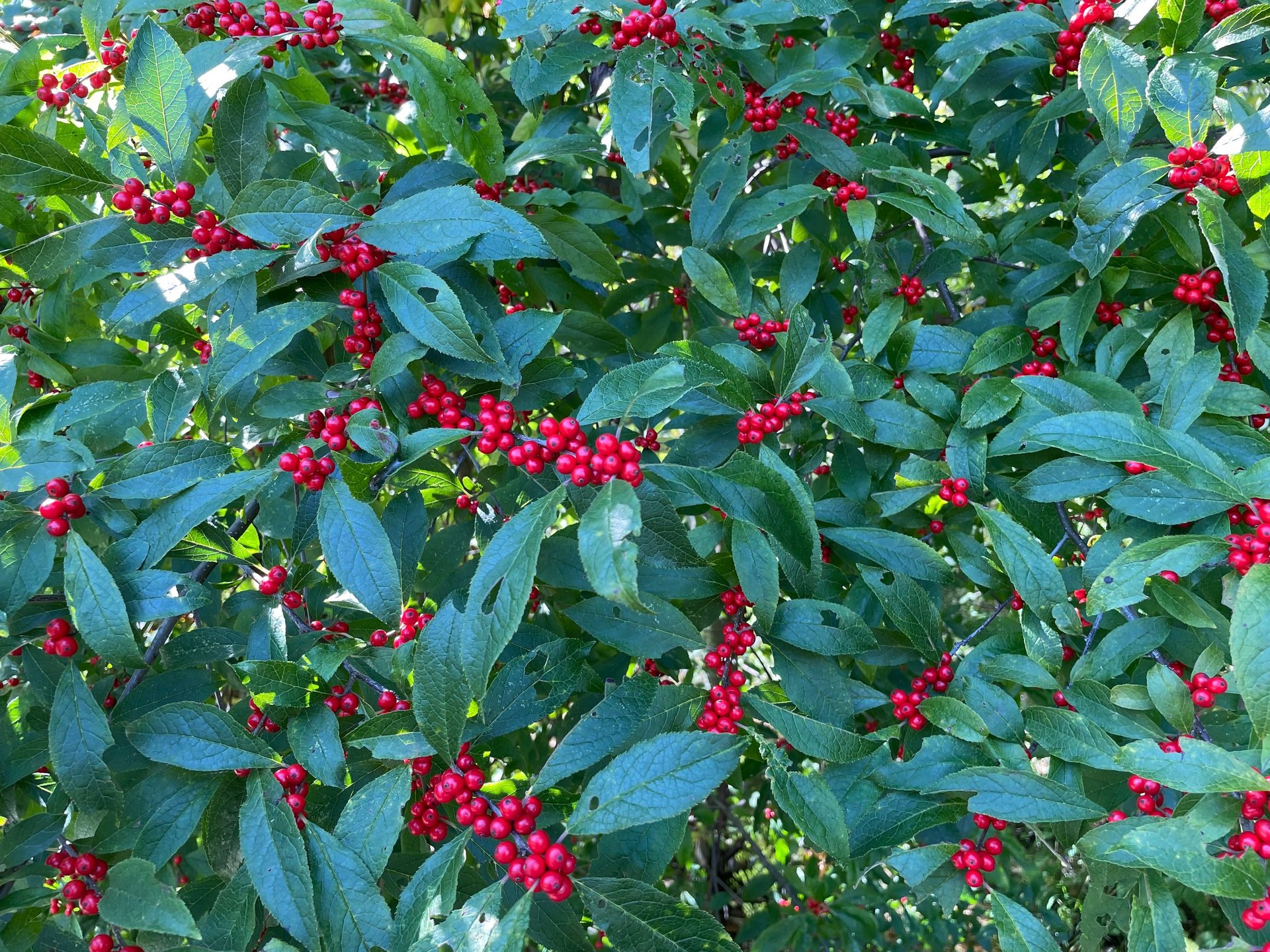
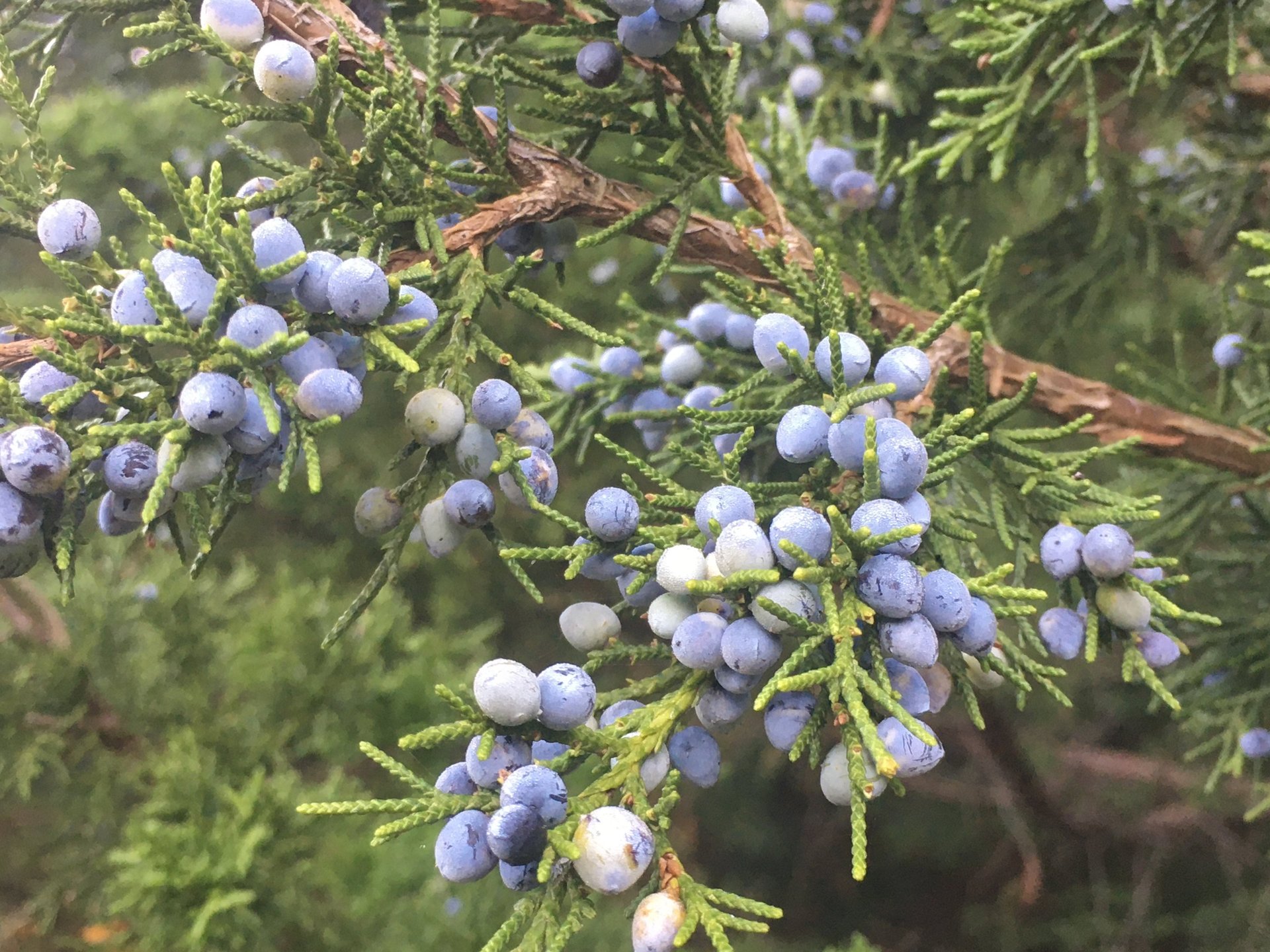
Coralberry (Symphoricarpos
orbiculatus) is not common in the
Catskills but can occasionally be found growing on dryish sites
with poor soil. When planted in the garden and given some TLC
it rewards us with a colorful display of berries from fall into
early winter. Birds occasionally feed on the berries as well.
|
|
||||||||||||||||||||||||||||||||||
![]() |
|
||||||||||||||||||||||||||||||||||
|
|
|||||||||||||||||||||||||||||||||||
|
|
|||||||||||||||||||||||||||||||||||
|
Click on image for a larger view
|
|
||||||||||||||||||||||||||||||||||
|
|
|||||||||||||||||||||||||||||||||||
|
|
|||||||||||||||||||||||||||||||||||
|
Gardening with Native Plants
|
|
||||||||||||||||||||||||||||||||||
|
|
||||||||||||||||||||||||||||||||||
|
|
|||||||||||||||||||||||||||||||||||
|
|
|||||||||||||||||||||||||||||||||||
|
If we can judge the popularity of a
gardening endeavor by the number of books written on it then
the decade of the 90's should be known as the decade of native
plant gardening, at the very least in a relative sense. We have
15 books on native plants or wildflowers that were published in
the 90's, but only 3 from the 80's, 2 from the 70's and 1 from
the 60's (and with recent publication of William Cullina's
great new book, The New England Wildflower Society Guide to
Growing and Propagating Wildflowers of the United States and
Canada, already 1 book in the 00's). Many of you may have been
growing native plants in your home gardens for many years.
Others might be wondering what all the fuss is about, and
usually have two questions: What plants can be considered
native and why should I incorporate them into my garden?
Native plants are those that grow naturally
in a certain region and were not introduced to that region by
humans. So many "wildflowers" are not native plants.
For example, purple loosestrife (Lythrum
salicaria) grows naturally in our
region but was introduced here from overseas. It has become a
problem plant in wet meadow habitats, forming virtual
monocultures that crowd out indigenous species. The same could
be said for many of the plants included in wildflower seed
mixes although most are not quite the rogue that purple
loosestrife has become.
As you can see from our definition of
native plant, in order to determine whether a plant is native
or not, a gardener must first circumscribe the region that he
or she considers their garden to be a part of. And this is
largely subjective and up to the whim of the individual
gardener. You might decide that you are a Catskill Mountain
gardener or an Ulster County gardener or a Hudson Valley
gardener or an eastern deciduous forest gardener. Any of these
choices would be fine. Gardening with native plants should not
be thought of as an intrusion of political correctness into the
horticultural world, but as an attempt to develop gardens that
possess a regional identity. Does your shade garden consist
largely of Japanese pachysandra, hostas and impatiens,
struggling to grow under a Norway maple and alongside a hedge
of forsythia overtopped with Japanese honeysuckle? If so, you
have plenty of company around the world. Now suppose the
denizens of your shade garden are wild ginger (Asarum canadense),
wood poppy (Stylophorum diphyllum), Solomon's seal (Polygonatum
biflorum), lady fern (Athyrium filix-femina),
sweet white violet (Viola blanda), and Pennsylvania sedge (Carex pensylvanica), growing
under the shade of red oak (Quercus
rubra) and sweet birch (Betula lenta) with
withe-rod (Viburnum cassinoides) and high-bush blueberry (Vaccinium corymbosum) in the
understory. Your shade garden is a microcosm of eastern North
America deciduous forest. And, with the exception of the wood
poppy which has more of a midwestern and southern distribution,
all the plants in your shade garden can be found growing
locally.
But how about that wood poppy? Some might
wonder if a native plant gardener has no qualms about putting
wood poppy into a Catskill Mountain or Hudson Valley garden
even though the species doesn't grow wild in these locations,
what's so wrong with growing one of those wonderful Asian
jack-in-the-pulpits like the Japanese cobra lily (Arisaema sikokianum)?
The answer is nothing is wrong with growing Japanese cobra lily
in your shade garden or a few hostas. This is an example of
ecological gardening in which the gardener uses species from
around the world that are adapted to our environmental
conditions. The garden becomes a composite of native plants and
plants from similar bioregions around the world, but still
retains a strong regional identity. Obviously the strength of
that identity begins to wane as the proportion of non-native
species in the garden increases as do the advantages that come
from growing native plants. At the extreme is the hosta-Norway
maple-forsythia-Japanese honeysuckle garden that has no native
plants, no regional identity, and none of the advantages that
come from growing native plants, but does have certain
disadvantages that can arise from the use of exotic plants in
the garden.
There are five reasons to incorporate
native plants into your garden.
(1) Aesthetics - Native plants are
ornamental.
Some of the hottest plants in ornamental
horticulture currently come to us from Asia, where plant
explorers continue to find new and interesting and occasionally
even spectacular plants, for example the Japanese cobra lily
mentioned above. Many gardeners find these plants to be more
interesting or beautiful than our native plants and certainly
Asia has a much more diverse group of jack-in-the-pulpits than
occurs in eastern North America, where we have only two members
of the genus, jack-in-the-pulpit, Arisaema
tryiphyllum, and the green dragon, Arisaema draconitum.
Now we happen to find our own jack-in-the-pulpit to be as
attractive and interesting as most of the Asian species and the
green dragon as unusual, but there is a natural human tendency
to value the new and exotic over the commonplace. But if it's
the new and unusual you're after, how about Baptisia, a genus of North
American plants that most of you are probably not familiar with
but which contains at least a half dozen stately plants with
interesting, blemish-free foliage, pea-shaped flowers that come
in shades of blue, white, or yellow, and ornamental seed pods.
If you're just looking for beauty and don't mind commonplace,
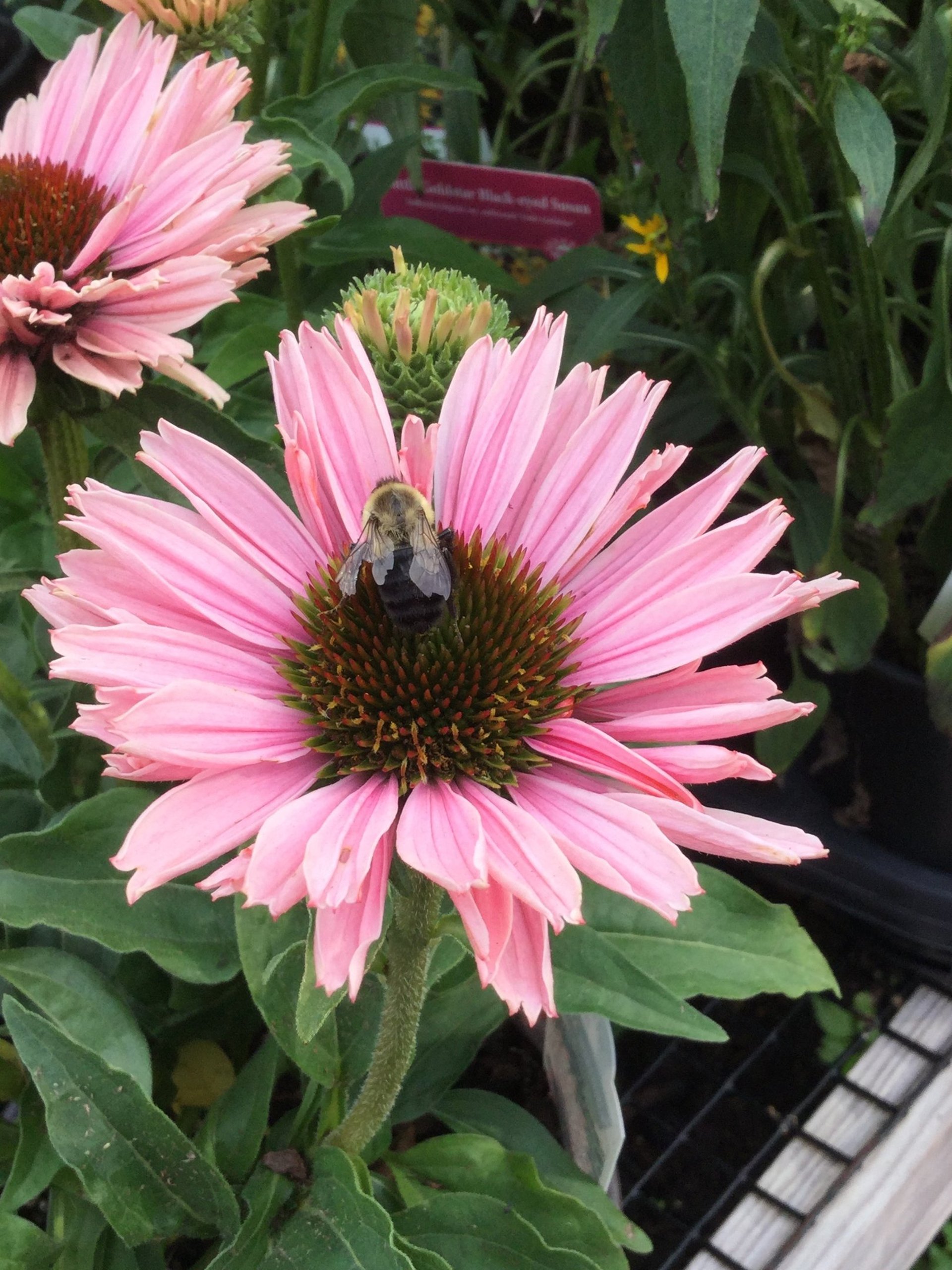
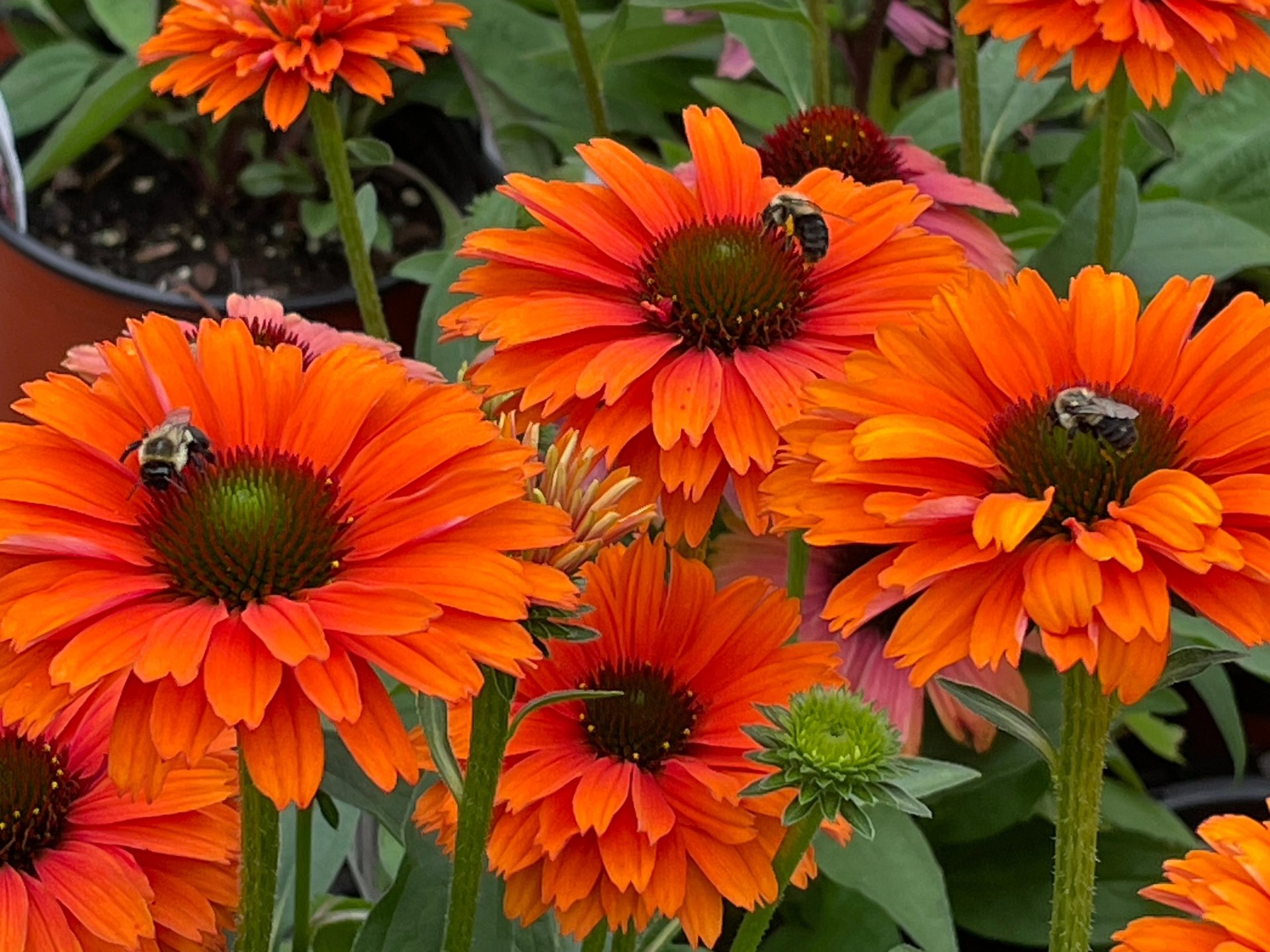
it's hard to beat Echinacea or Rudbeckia, two uniquely North American genera whose
members include some of the most popular and beautiful garden
plants. Or, if diversity is you're thing, North America is home
to around 250 species of Penstemon, and virtually every member of the genus is a
wonderful ornamental with tubular flowers in shades of red,
pink, purple, blue, yellow and white. We could describe many
more great North American plants but we think you get the point:
the plants of North America are every bit as garden-worthy and
ornamental as those that hail from other continents. If you
don't believe me, just check with European gardeners, whose
flower borders rarely go without such North American plants as
joe-pye-weed (Eupatorium spp.), goatsbeard (Aruncus
dioicus) or black cohosh (Actaea racemosa) or
European plant breeders who create cultivars of many of our
native plants, then send them back over the Atlantic to
unsuspecting gardeners who snap them up, not realizing that the
progenitor of the cultivar can be found growing wild nearby and
be just as attractive in their gardens. A perfect example is Helenium - nursery
catalogs are full of cultivars with names such as Kugelsonne
(Sunball) or Dunkelpracht (Dark Beauty) that were created by
European breeders. They are primarily derived and in many cases
are indistinguishable, at least to our eye, from sneezeweed or
Helen's flower, Helenium autumnale, a common wet meadow plant of eastern North
America.
(2) Horticulture - Native plants are
adapted to the conditions we garden in
For beginning gardeners especially, who may
not yet be as knowledgeable about plant needs as more
experienced gardeners, native plants take the guesswork out of
gardening and help ensure that one's first garden doesn't
become one's first, very expensive, compost pile. If you choose
plants that are native to our region they are likely to thrive
in our warm, wet summers, fluctuating spring temperatures, cold
winters, and, usually, acidic, clayey, rocky, soils. After all,
these are precisely the conditions in which the plant grows in
the wild, and without the nurturing hand of the gardener. Of
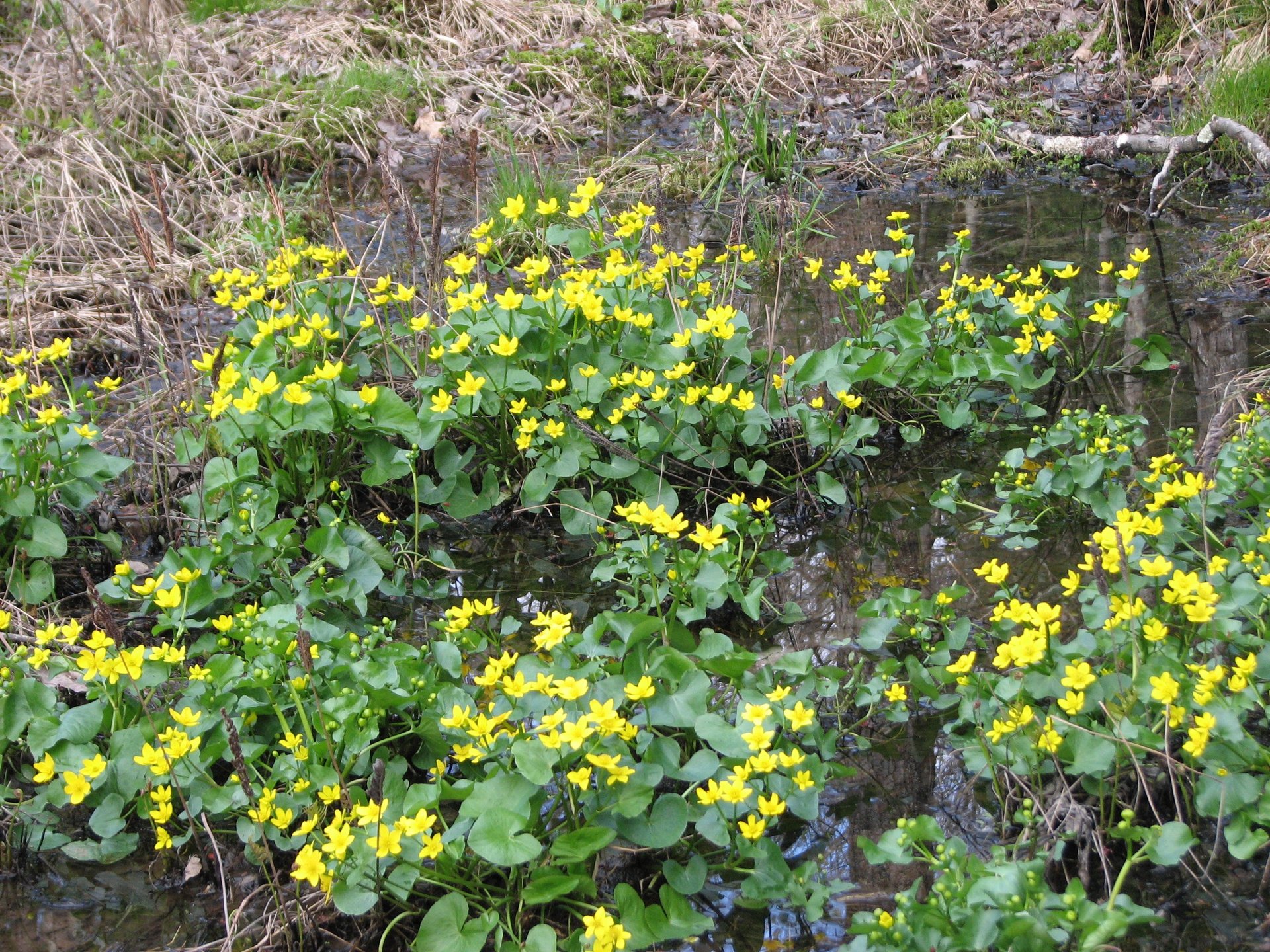
course, knowledge of plants still helps. Marsh marigold (Caltha palustris), not
a marigold at all, but a member of the buttercup family, is a
common native plant in our area, but as you can surmise from
its name, inhabits wet meadows and pondsides and needs abundant
moisture in spring - it will languish and die in a location
that is sunny and dry throughout the year. The beginning
gardener can't just assume that because marsh marigold is a
native plant that it will thrive in any garden location.
Although it seems to be a common notion, it
is not necessarily the case that native plants are more
unpalatable to the current scourge of our gardens, the
white-tailed deer, than exotic plants. For example, there is
probably no plant more reliable deer-resistant than the
daffodil, which hails from Europe and North Africa, while one
of our most beautiful native plants, the cardinal flower (Lobelia cardinalis) is
like candy to deer - if they find it they will eat it.
(3) Ecology - Native plants provide
habitat and food for wildlife
Virtually all plants, native or exotic,
provide nesting areas for birds and small mammals, and food for
them as well - and food for many different kinds of insects
including butterflies, bees, and garden beneficials (those
insects such as ladybird beetles and syrphid flies that help us
out by preying on garden pests such as aphids). However, native
plants are particularly good choices for those interested in
wildlife gardening because our local wildlife is often adapted
to our local plant species. This probably applies less to birds
who seem to have no problem feasting on non-native fruits such
as orchard cherries, than to insects, many of which are
host-specific. The best regional example of this occurs in the
Pine Bush habitat near Albany, where native plants such as wild
lupine (Lupinus perennis) and horsemint (Monarda
punctata) thrive in the sandy soil
and hot, dry conditions. Much of the Pine Bush has disappeared
under the combined pressures of housing developments, shopping
malls and highway construction. Along with the habitat, of
course, go the plants, and along with the plants goes a
particularly beautiful small butterfly, the Karner blue - an
endangered species that feeds exclusively on wild lupine. As a
society we can create nature preserves where lupine and Karner
blue butterflies can persist. However, the potential amount of
habitat for wildlife that can be created by home gardeners is
immense - imagine the cumulative effect if every home gardener
devoted at least a portion of their garden or property to
creating habitat for wildlife. If you live in or near the Pine
Bush of Albany, you can help preserve the Karner blue
butterfly. If you live somewhere else, the habitat you create
will help preserve numerous species of birds, insects,
amphibians, reptiles and mammals even if they are not currently
in as desperate a situation as the Karner blue.
Another reason that native plants are a
better choice for wildlife gardening than exotic species is
that most have not been overly bred for characteristics that
humans find desirable. When plants are bred for overall size,
or for flower color, size or form, they often lose other
features that make them useful for wildlife. They may lose the
fragrance that insects use to locate the plants - think of many
of our modern rose cultivars. Production of nectar or pollen
may be considerably diminished in cultivars and this makes the
plants less useful for butterflies, bees and many other
insects. Many cultivars are hybrids and so are often sterile
and do not produce viable seeds. Shrunken, inviable seeds are
of little food value to birds and many insects that are seed
eaters. As natives become more popular garden subjects,
breeders are beginning to create "improved" cultivars
and these may suffer from the same problems as cultivars of
exotic plants. Generally speaking, the best choices for
wildlife gardening are native plants that have not been
"improved" according to human standards.
(4) Conservation - Native plants
populations are in decline
Many native plants are becoming rarer as we
turn increasing amounts of wild land into workplaces, housing
developments and shopping malls. Overbrowsing brought about by
out-of -control deer populations is also responsible for
reducing the sizes of native plant populations. Home gardeners
can help reverse this trend by growing native plants. But to
ensure that you are helping to conserve declining native plant
populations you have to be careful about how you obtain your
plants. Many native plant gardeners may be doing more harm then
good if they obtain plants by digging them from the wild or
buying them from nurseries that dig plants from the wild. If
you dig plants from the wild you aren't increasing plant
numbers, but simply moving plants around in space. Moreover,
many plants that are dug from the wild do not survive for long
in our gardens. They suffer from transplant shock or from being
put into the wrong spot. Large, mature specimens are often the
plants that people spot on a stroll through the woods. They are
so impressive that people decide to move them to their garden -
but large, mature specimens don't transplant well and are
unlikely to survive. If a nursery doesn't state that their
plants are nursery propagated assume that they are not and
beware of statements such as "Our plants are nursery
grown". Plants can be dug, held in pots for any length of
time and be considered nursery grown. Look for a statement that
the plants are nursery propagated. Some nurseries claim to be
selling plants that are rescued from housing or other
developments where they clearly face imminent demise. Be wary
of these nurseries as well, because there is no law that
prevents such a claim from being made even if it isn't true.
Become more familiar with the plants you are growing or wish to
grow - their life cycles and the means by which they can be
propagated. Then rather than digging plants from the wild or
obtaining them from nurseries that dig plants, propagate your
own. We think you'll find that this will take your gardening to
a new level of satisfaction.
And if you don't have the time or resources
to propagate all the plants you would like for your garden,
obtain plants from nurseries that sell only propagated plants.
The best opportunity for local gardeners to
help conserve a federally-listed endangered species involves
the wild monkshood (Aconitum
noveboracense). This plant has a
disjunct North American distribution, being found in a few
localities in the midwest and in New York State. In New York it
is found at only a few sites in the Catskill Mountains. In
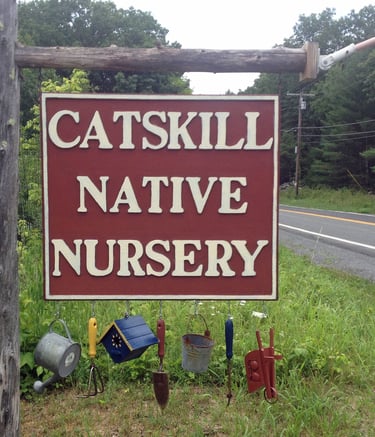
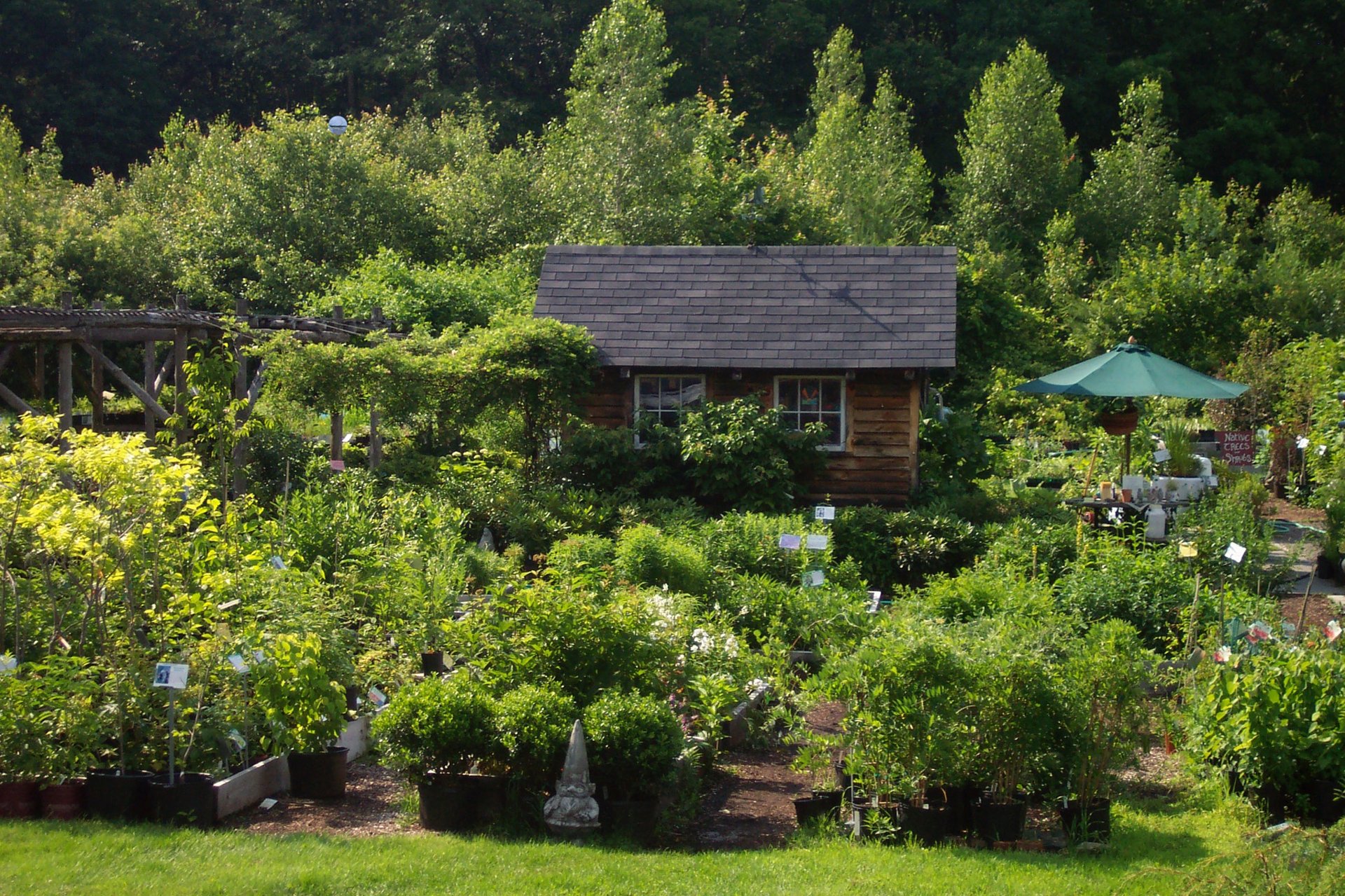
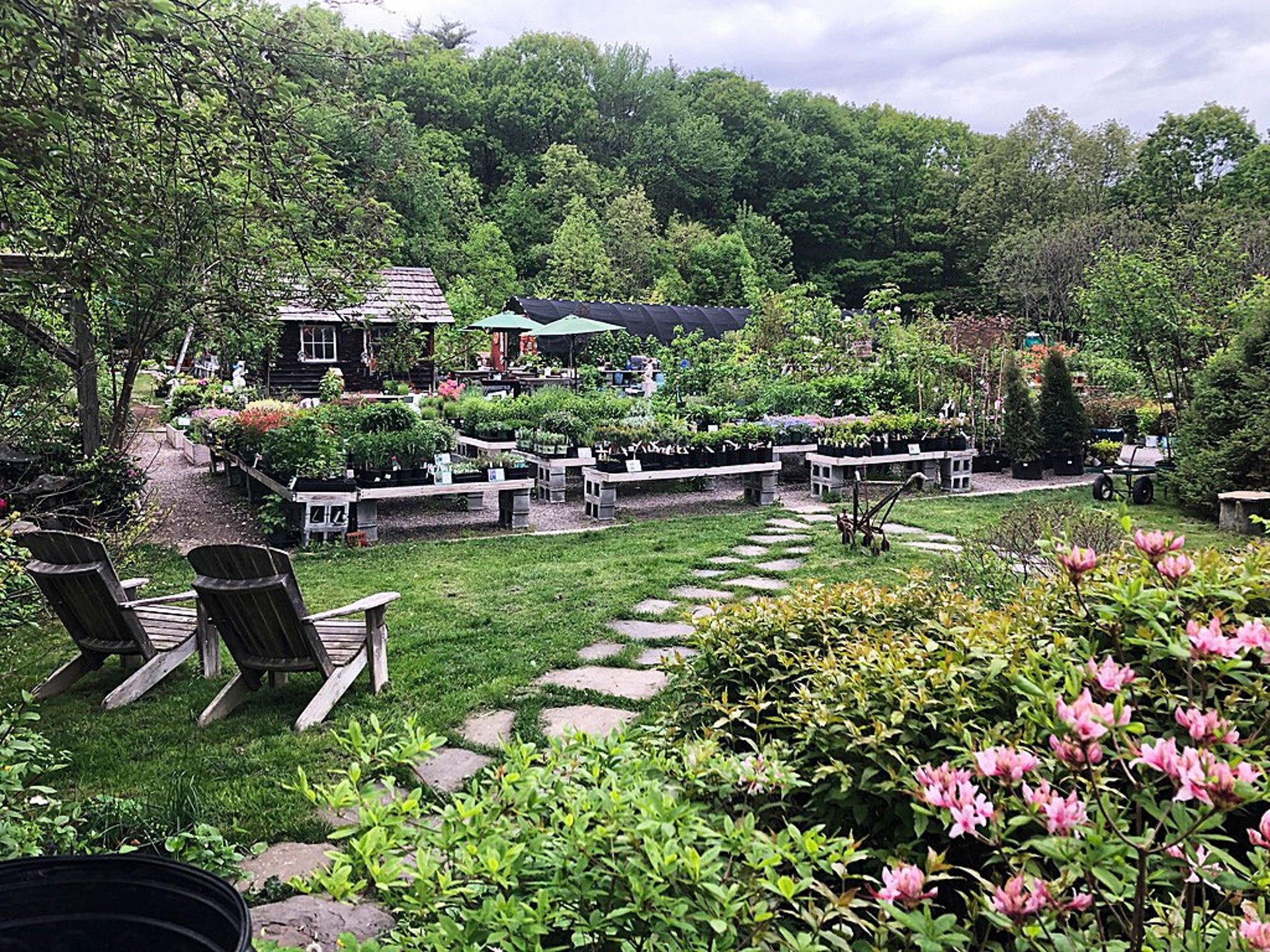
conjunction with the Olive Natural Heritage Society, Catskill
Native Nursery is involved with an effort to conserve the
species. We are propagating monkshood by seed and hope to
eventually establish new populations at sites in the Catskills.
Eventually, wild monkshood plants will also be available for
sale at the nursery. But don't get the idea that only
officially "listed" plants are worthy of attention.
By growing any of our local native plants in your garden you
will be helping to conserve them.
(5) Conservation - Exotic plants can be
invasive
Many popular exotic garden plants can
escape our gardens, invade wild lands and reduce populations of
native plants. This could be a topic for an entire article, but
here I'd like to briefly address the issue by providing a
couple of examples. At the beginning of this article we
described a hypothetical shade garden. Two of the plants in
that garden have the potential to be invasive and probably
should be avoided in any new plantings and perhaps eliminated
from existing gardens. Japanese honeysuckle (Lonicera japonica), along
with a number of Asian bush honeysuckles, has fragrant flowers
and colorful red berries that provide food for birds. Birds, of
course, are indiscriminate in where they deposit the seeds
contained in those berries after they have passed through their
digestive system. By this mechanism, Japanese honeysuckle moves
out of our gardens and into surrounding lands. Being adaptable
to a wide range of soil types, moisture regimes, and light
densities, it has no trouble establishing itself in just about
any habitat. It covers the ground in a dense thicket that
smothers other plants and can overclimb shrubs, eventually
smothering them. The Norway maple (Acer
platanoides) is a popular ornamental
tree that is fast-growing in a variety of soil, moisture and
light conditions, and has few pests or diseases. It is similar
in size, shape, flower and fruit to our native sugar maple (Acer saccharum), but
generally outcompetes it when the two grow in the same area.
Mature trees produce numerous seedlings surrounding the parent
tree, and in combination these cast a dense shade under which
virtually no other herbaceous plants or tree seedlings survive.
Clearly, gardeners will be doing native plants a favor if they
avoid growing these plants in their gardens. Instead of Norway
maple plant sugar maple and instead of Japanese honeysuckle,
plant our native trumpet honeysuckle (Lonicera sempervirens).
|
|
||||||||||||||||||||||||||||||||||
|
|
|
|
|
|
|
|
|
|
|
|
|
|
|
|
|
|
|
|
|
|
|
|
|
|
|
|
|
|
|
|
|
|
|
|
|